
Every year we plant a garden with the kids, and every year something pops up that we didn’t plant. One summer it was sunflowers. Everywhere.
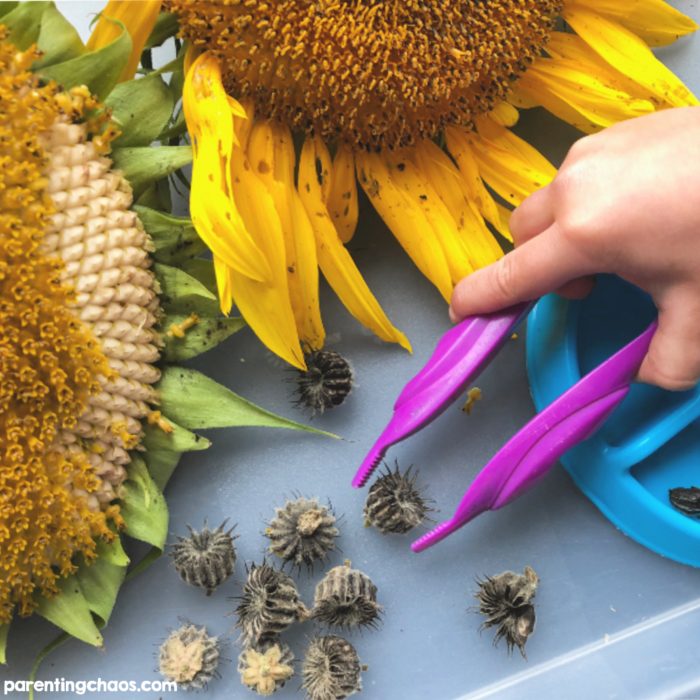
So we cut a few, put them on a tray and turned them into a hands-on lesson on the parts of a sunflower, with a little tweezer work for fine motor practice.
How to Set Up a Sunflower Dissection
Spring Scavenger Hunt Packet
Get the printable1 or 2 sunflower heads (fresh or dried)
View on AmazonFine motor tweezers
View on AmazonA sturdy tray
View on AmazonSerrated knife (adults only)
A Sunflower’s Life (optional book)
View on AmazonSome links above are affiliate links. If you buy through them, we may earn a small commission at no extra cost to you.
Harvest
Cut a sunflower just below the head. We picked ours from the garden.
Rinse
Rinse the heads outside to wash off any bugs.
Set up the tray
Put the heads on a tray with tweezers and small bowls.
Pluck and count
Use tweezers to pull out seeds and count them. Dried heads are easier for little hands.
Slice it open
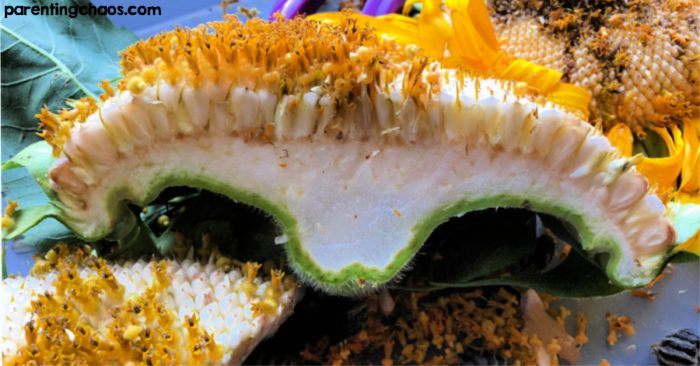
An adult cuts the head in half with a serrated knife so kids can see the receptacle and the inside.
Tip
Our sunflowers didn’t have mature seeds yet, which made plucking tricky. Next time we’ll use dried heads. Unopened buds are fun to dissect too.
Sunflower Facts for Kids
- It’s many flowers in one. The dark center is made of hundreds to thousands of tiny flowers called disc florets.
- Bees love them. Once the disc florets are pollinated, they become seeds.
- The yellow “petals” are ray florets. They’re flowers too.
- The receptacle is the base of the head that holds it all together.
More nature activities
See all →


Keep the learning outside with our spring geoboard task cards.
The scavenger hunt packet includes
- Printable nature scavenger hunts
- Instant PDF download, nothing is shipped
Perfect for
- Garden and plant units
- Preschool and kindergarten
- Outdoor learning
Sunflower Dissection FAQ
The ray florets (yellow petals), disc florets (the center), seeds, receptacle (the base of the head) and stem.
No. Each head is made of hundreds to thousands of tiny flowers.
Fresh works for looking and cutting. Dried heads make plucking seeds easier.
About 3 and up. Only adults should use the knife.
More Nature and Science Activities
See all →

From families like yours
Did you try it? Tell us how it went!
We love seeing these activities out in the wild: the lumpy letters, the snack breaks, the proud “I made a B!” moments. Leave a star rating, tell other parents what worked (and what totally didn’t), and add a photo of your setup if you’d like.
No stories yet. Be the first family to share how it went!
