
Build a Gingerbread House Magnetic Tile Printable
If your kids are anything like mine, gingerbread houses last approximately five minutes. And that’s being generous. So this year we swapped the frosting meltdown for something a lot more kid-proof: a gingerbread house magnetic tile printable you stick right onto your magnetic tiles. Suddenly nothing collapses, nobody’s eating gumdrops off the floor, and the

Cranberry Spy Ink Science Experiment
You know that look when a science experiment works and your kids’ eyes go huge, like they just did magic? That’s this cranberry spy ink experiment. Kids write invisible messages with baking soda water, then paint over them with homemade cranberry ink and watch the secret appear. Ages 4 and up Time 30 minutes Science

Fizzing Cranberry Science Project
What happens when you mix cranberry juice and baking soda? Way more than you’d expect. This simple science project turns a kitchen staple into a color-changing chemistry lesson. Kids compare three jars to see how acids and bases react, and why cranberry juice changes color. Ages 4 and up Time 20 minutes Science Acids, bases,

Floating Cranberry STEM Structures Building
We started this cranberry STEM challenge on a whim with a half bag of cranberries in the fridge. Ten minutes later, the kitchen was full of towers, bridges and wobbly creations. Cranberries and toothpicks make a perfect building set, and the cranberries float, so you can test rafts too. Ages 4 and up Time 20

Spiders Floating Drawings Experiment
This one blew my kids’ minds. We drew spiders with a dry erase marker, poured in water and our creepy crawlies lifted right off the dish and floated. It feels like magic, teaches a little science and cleans up in seconds. Ages 4 and up Time 10 minutes Supplies 4 Science Insoluble ink Jump to:

Blood Model Sensory Bottle
This blood model sensory bottle lets kids see what’s floating around inside their bodies, with squishy red beads, “white blood cells” and glittery “plasma.” It’s the perfect mix of “eww!” and “wow!” It takes about five minutes to make, and somehow turns into half an hour of everyone arguing over who gets to shake it

Witches Brew Science Experiment
Bubbling cauldrons, swirling colors and a little glitter. This witches brew science experiment is part potion play, part real chemistry, and every one of my kids, from the toddler up to the tween, wants in when it comes out. Set it out as a fizzy sensory activity for little ones, or turn it into a

Easy DIY Bee Hotel for Kids
If your little ones love watching bees bounce from flower to flower, this DIY bee hotel is a sweet way to help the bees and get kids excited about nature. It’s made from a recycled can, rolled paper tubes and a few sticks from the yard. Kids practice measuring and rolling while they learn how

St. Patrick’s Day Fizzing Pot of Gold Experiment
Turn St. Patrick’s Day into a fizzing science adventure! This pot of gold bubbles over with glittery yellow foam right in front of your kids. It’s a simple baking soda reaction with a holiday twist, and kids can tweak the recipe to make it fizz even bigger. Ages 3 and up Time 15 minutes Science

Nature Color Scavenger Hunt
Kids love adventures, and this is one of the easiest. Grab an empty egg carton and some markers and you’ve got a color scavenger hunt. Kids hunt for colors in nature and match them to each cup, and suddenly every leaf, rock and flower is exciting. Ages 2 and up Prep 10 minutes Where Yard,

Butterfly Life Cycle Playdough Mats
These butterfly life cycle playdough mats let kids squish their way through metamorphosis. They roll tiny eggs, a wiggly caterpillar, a chrysalis and a beautiful butterfly, right on the mat. It’s a hands-on way to make the butterfly life cycle stick, and it builds fine motor skills at the same time. Perfect for a spring

DIY Earth Day Seed Bombs for Kids
Seed bombs are little balls of paper pulp and seeds that kids can plant and watch grow. They’re a fun, hands-on Earth Day project. They reuse paper scraps, sneak in some plant science and give kids a reason to get outside. Ages 3 and up Time 45 minutes plus drying Uses Recycled paper Season Spring

Dinosaur Playdough Mats
Got a dinosaur-obsessed kid? These dinosaur playdough mats let them build 12 prehistoric creatures, from a mighty T. rex to a spiky Stegosaurus, while picking up real dino facts along the way. Every mat has a picture to copy and a fact table with the period, diet, habitat, length, weight and fun traits. It’s fine

Printable Butterfly Life Cycle Posters
These printable butterfly life cycle posters use real pictures to show kids every stage of metamorphosis: egg, caterpillar, chrysalis and butterfly. Real photos make the life cycle click in a way cartoons just can’t. They’re perfect for a science wall, a spring center or alongside raising real butterflies at home or in the classroom. Ages

Sink or Float Easter Egg Science Experiment
Sink or float experiments are always a hit, and plastic Easter eggs make them even more fun. Kids fill the eggs, predict and test. It’s a simple, hands-on way to explore buoyancy and density with stuff you already have. Ages 3 and up Time 30 minutes Science Buoyancy, density Mess Use towels Jump to: How

Butterfly Life Cycle Sensory Bin for Kids
Kids are naturally drawn to butterflies, and this butterfly sensory bin lets them act out the whole butterfly life cycle with their hands. Rice and pantry pasta become eggs, caterpillars, chrysalises and butterflies, and little ones can scoop, sort and retell the story over and over. It takes about 10 minutes to set up and

Crawling Colors! A FUN Science Experiment in Color Mixing
Basic color theory for Kids with this amazingly fun color mixing science experiment – Crawling Colors!

Fizzy Earth Day Science Experiment
This fizzy Earth Day science experiment lets kids “paint” a planet with bubbling green land and blue oceans. It’s a simple baking soda and vinegar reaction that opens up great conversations about our planet and how to take care of it. Ages 3 and up Time 20 minutes Science Acid-base reaction Supplies Kitchen basics Jump

How to Make a Lemon Battery Science Project
Can a lemon power a light? With a little copper and zinc, it can! This lemon battery experiment is a fun first look at electricity and circuits. One lemon makes a tiny bit of power, so you’ll link a few together to light an LED. Ages 6 and up Time 30 minutes Science Chemical energy,

How to Build a Leprechaun Trap (STEM Project for Kids)
Want to catch a leprechaun this St. Patrick’s Day? This leprechaun trap uses a coffee can, a popsicle stick ladder and plenty of shiny bait. It’s a fun STEM challenge that gets kids planning, building and testing, with a little magic mixed in. Ages 4 to 9 Time 45 minutes plus drying Type STEM project

Printable 2 Piece Animal Puzzle for Preschoolers
These printable 2 piece animal puzzles have kids match each animal to a real, close-up photo of its fur, feathers, scales or shell. It’s simple problem solving that toddlers, preschoolers and kindergartners love. The puzzle cuts make them self-checking, so kids can work on their own, and they spark great conversations about how animals feel

Animal Habitat Clip Cards
These animal habitat clip cards are a hands-on way to teach preschoolers where animals live and why. Kids clip a clothespin on the right answer, which builds fine motor strength while they learn. Ages 3 to 6 Cards 184 in 2 sets Skills Science vocabulary, fine motor Prep Print, cut, laminate Jump to: How to

Printable Zoo STEM Challenge Cards
These zoo STEM challenge cards give kids a problem to solve: build a pool for the walrus, a tree for the koala or a ticket booth for the zoo, using everyday materials. Planning and reflection sheets walk kids through the engineering process, so they plan, build, test and talk about their designs, at home or

Unplugged Coding Zoo Animal Block Code Pathways for Kids
These unplugged coding pathways teach kids the basics of coding with no screens at all. Kids lay out start, forward, turn, stop and repeat blocks on the floor to build a path, then move through it. Animal movement blocks like “stomp like an elephant” and “hop like a kangaroo” turn it into a brain break,

Printable Dinosaur Playdough Task Cards
Have a little one who loves dinosaurs? These dinosaur playdough task cards let them build 18 prehistoric pictures, from a T. rex and Triceratops to a fossil, a dinosaur egg and a footprint. Twelve fact cards print on the back with pronunciations and kid-friendly facts, so kids learn while they squish. Great for home or

Printable Human Body Playdough Mats
These printable human body playdough mats let kids build organs right on a body outline, from the brain and heart to the lungs and stomach. It’s a hands-on way to learn the body systems. Body system cards cover the digestive, circulatory, respiratory, nervous, skeletal, muscular, lymphatic and urinary systems. The body mats come in three
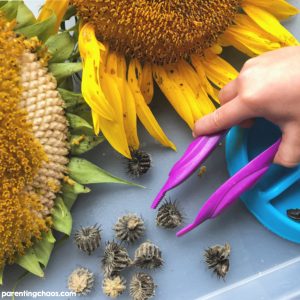
Sunflower Dissection: Parts of a Sunflower for Kids
Every year we plant a garden with the kids, and every year something pops up that we didn’t plant. One summer it was sunflowers. Everywhere. So we cut a few, put them on a tray and turned them into a hands-on lesson on the parts of a sunflower, with a little tweezer work for fine

Hatching Fizzy Dinosaur Eggs
My kids love anything fizzy. No matter how many times we do it, a fizzing reaction still feels like magic to them. These hatching dinosaur eggs hide a tiny dino inside a baking soda shell. Squirt on vinegar and watch them fizz open. Ages 3 and up Prep 20 minutes plus 2 to 3 hours
Make Your Own Dinosaur Fossil Dig Kit
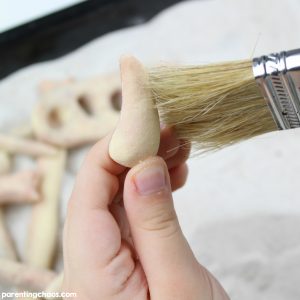
Do you have a budding paleontologist? My son can name more dinosaurs than I knew existed. So during our dinosaur unit, we explored what paleontologists do. We made salt dough dinosaur bones, baked them, buried them in sand and went on a dig. Ages 3 and up Time 1 hour plus baking Builds Fine motor,
Frozen Ocean Animal Rescue
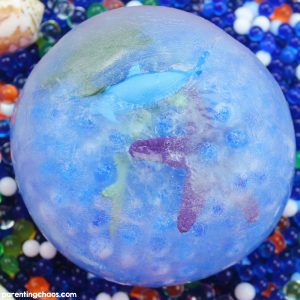
Cool off with this frozen animal rescue! Ocean animals are trapped in big balls of ice, and kids test different ways to melt them free. It’s a fun science experiment and a great outdoor activity on a hot day. Ages 3 and up Prep 10 minutes plus overnight freezing Science Melting, reactions Where Outside is
Ocean Zones Sensory Bottles
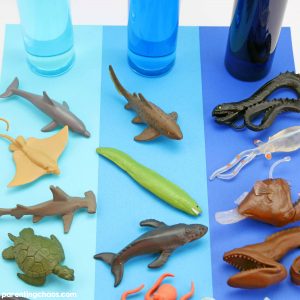
These ocean zones sensory bottles go from light blue to dark blue, just like the ocean gets darker the deeper you go. Kids sort sea animals into the zone where they live. My kids had a ton of questions, which is the best part. Ages 4 to 9 Prep 15 minutes Science Ocean zones, adaptations
Ocean Pollution Activity for Kids: Clean Up an Oil Spill
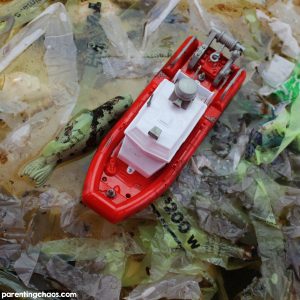
Kids hear a lot about ocean pollution, but it’s hard to picture until they try to clean it up themselves. In this ocean pollution activity, kids make a pretend oil spill and plastic mess in a bin of water, then test tools to get it out. Spoiler: it’s a lot harder than it looks. That’s
DIY Heat Sensitive Color Changing Playdough
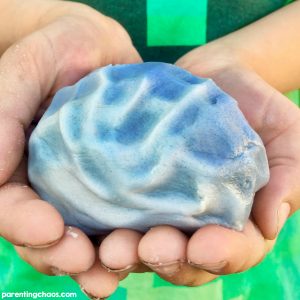
My kids got really into mood rings and wanted to know how they change color. So we made heat sensitive color changing playdough to find out. It’s made with thermochromic pigment, which changes color with temperature. Warm hands and cold counters make the color shift right in front of you. Ages 4 and up Time

A Really Big List of Free Science Websites for Kids
Make the most out of your child’s time online with these Free Science Websites for Kids. This insanely massive list of fun learning science websites includes sites for a wide range of ages, from preschool and up. The majority of these though are best suited for elementary aged students. Each one of the sites listed

Exploring Dental Health with Slime
Every February the American Dental Association (ADA) sponsor’s National Children’s Dental Health Month to raise awareness and education on oral health. Since this month is dental health month, this week we have been exploring taking care of our teeth and dental hygiene for kids with this fun “How to Brush Your Teeth” Slime Activity! This

Fall Nature Hunt for Kids
Fall is the perfect season for watching nature change. Leaves turn every color, squirrels race around with nuts and seeds and pods drop everywhere. A fall nature hunt gives kids a reason to slow down and really look, and it works for toddlers all the way up to big kids. Ages 1 and up Time

Exploding Lava Science Bottle
This Exploding Lava Science Bottle is a quick and easy kitchen science experiment that kids will love. If you are looking for a quick boredom buster to do with items you already have around your house then you gotta give this a try! Before doing this science experiment, know that it is messy! The exploding

The Ultimate Treasure Hunt – Geocaching with Kids
Lately, my kids have been very interested in Geocaching. To be honest, when they approached me about this I was extremely skeptical about whether or not this was an appropriate activity that my kids would enjoy. After some research and our first adventure, we are in love! Geocaching with kids is like the ultimate treasure

ABC Excavation Sensory Bin
Lately, Mr. Q has been interested in everything ABC. To help engage him in play we have been trying out a variety of different alphabet games. This Alphabet Excavation Sensory Bin has been one of our favorite ABC kids’ games so far! Making this bin did require some planning. This is not a throw together

Fizzy Fine Motor ABC’s
Lately, it has been hot, hot, hot here. Like step outside and feel like you are melting hot. These Fizzy Fine Motor ABC’s Ice Cubes were a fun way to cool down while working on our letter recognition.

Parts of a Flower Cutting Tray
This week our yard is finally in full bloom. The kids have been absolutely fascinated with the different types flowers- they all look so different! This Parts of a Flower Cutting Tray was a fun scissor activity to work on my kids’ basic scissor skills while getting some hands-on exploration of flowers. Before delving into

Kitchen Science Kit for Kids
Lately, I have gotten a lot of questions about how we store all of our science experiment materials. This Kitchen Science Kit for Kids is our easy solution for keeping everything we might need in one easy to reach place. This kit sits above our kitchen counter and is stored in two main containers –

Biome in a Bottle: Sensory Bottle Biomes for Kids
These Sensory Bottle Biomes are a fun, yet simple way for kids to explore what makes up a biome and to compare how various plant and animal life has adapted to fit that biome.

How to Make a Compass
Explore magnetic poles, force, and physics with this simple science experiment for kids that will teach them how to make a compass!

Ice Painting with Salt: Exploring Fusion
Spring is beginning to sneak up on us, which basically means you never know what the weather is going to be. I have lost track of how many times this year we have watched the snow melt to the point that the ground gets wet enough to soak your shoes only to wake up the

Skittles Experiment for Kids: Why Don’t the Colors Mix?
My kids have a bit of a candy problem. I find little stashes everywhere: in their dressers, under pillows, and once in a floor vent (that was a fun one to clean up). So this Skittles experiment was secretly my way of clearing out one more stash. It turned into one of our favorite science

Exploding Pumpkin!
This Exploding Pumpkin Experiment is super neat! Kids will be amazed by this simple science experiment!

Frog Egg Slime! A Slippery Squishy Sensory Bin
Ya’ll are never going to believe what this Frog Egg Sensory Bin is made out of, but it was perfect for setting up some pretend play while learning about the anatomy of Frog Eggs.

Pine Cone Experiment: Why Do Pine Cones Open and Close?
Why Do Pine Cones Open and Close? This student led science experiment is a fascinating and quick learning activity that the entire family will enjoy!

How to Make a Crystal Geode
Crystal Egg Geodes are a fun yet simple science experiment that engages children in learning the steps of the scientific method. This makes it a fantastic experiment for science fairs, scout groups, or even just a playful weekend at home!

Pudding Cup Anemometer
A Pudding Cup Anemometer is a fun way to recycle your snack packaging, get your kids creating, building, and learning about the weather!

Shaving Cream Clouds on a Mirror
Shaving Cream Clouds on a Mirror – painting clouds beneath a blue sky. Such a beautiful way for kids to enjoy some sensory art and mirror play!

Insect Inspections Sensory Bin
An insect sensory bin is a great way for toddlers and preschoolers to explore and learn about bugs from the comfort of your home.

Bug Bin: A Simple Slimy Sensory Bin
Insect Sensory Bin: A super slimy bin that is fantastic for pretend play and fine motor. This easy distraction will have your child engaged and learning!

How to Grow Your Own Magic Crystal Tree
Create a magic tree out of salt crystals, cardboard, and a few other household items. Within a day, you’ll have a colorful crystal covered tree that seemed to magically sprout from nothing!

Butterfly Life Cycle Observation Experiment
Through a series of activities, students will study the butterfly life cycle while noting its development from a caterpillar to a butterfly.

Under the Sea! Ocean Animals Sensory Bin
Ocean Animals Science Sensory Bin: Sea shells, fossils, shark teeth, and more! This simple sensory bin is a great way to get children exploring marine life through sight, sound, touch, and even scent!

Bouncy Egg Experiment for Kids
Bouncy Egg Experiment: Did you know that you could make an egg bounce? Try the Bouncy Egg science experiment and see how it works!

Exploding Dinosaur Mud!
Exploding Dinosaur Mud: Science Experiments with bi-carb ROAR! These dinosaurs are stuck in the mud! They need a magic potion to set them free from their lava rocks!

Dinosaur Nests! Exploring Science and Nature
Dinosaur Nests: Exploring how Dinosaurs raised and cared for their babies with a fun and messy sensory science activity!
This science activity for kids is a great way to get outdoors and connect with nature while exploring how and why dinosaurs built their nests the way that they did.

Excavating Dinosaurs from Ice
Excavating Dinosaurs: Melting ice with salt and water. Science, water play, and fine motor development all wrapped up in a fun, icy activity!

Melting Hearts! Dissolving Conversation Hearts Science Experiment
Looking for science ideas for Valentine’s Day? Try your hand with this dissolving conversation hearts science experiment.

Love Potion Number 9: Sensory Science Experiment
Who can’t use a little extra love chemistry in their lives? Especially when you have young kids…you know what I mean, don’t you!? Why not grab some basic ingredients out of your kitchen and set up this fun sensory-play Love Potion #9 Chemistry Experiment to get your kids exploring and thinking about the people in their lives!

Marine Life Sensory Bin- A Bubbly Small World!
Make a marine life sensory bin to play that will have your children exploring sea creatures and scientific reactions!

Rain Cloud in a Jar: A Fun Hands on Learning Experiment!
Rain Cloud in a Jar: make a model of a rain cloud using shaving cream, water, and food coloring! Your kiddos will LOVE this hands on science activity!

Juice Box Planters: Gardening with Kids
I am a member of the Collective Bias® Social Fabric® Community. This shop has been compensated as part of a social shopper amplification for Collective Bias and its advertiser. #UltimatePlaydate #CollectiveBias One of our favorite family activities is gardening with Grandma (or in my kids case great-grandma). It is something both kids have an absolute

Cloud in a Cup
Kitchen science is a great way to get kids thinking about how things work. Try this easy science experiment for kids and make your own cloud in a cup

Science for Kids: Best iPad Apps
Electronics intertwined into education has had a profound impact for my family. My daughter definitely has had her fair share of struggles when it comes to learning and I have had my fair share of disagreements about how things should be done. Yet, when it comes to the iPad I fully agree that it has